Choosing the right shower chair begins with a practical question: “what size shower chair do I need?” The answer depends on more than height or weight. It depends on the user’s balance, the shower’s footprint, and whether the chair leaves room to move safely. A seat that looks spacious in a product photo may feel cramped beside a glass door or wall-mounted handle.
Before comparing models, measure the shower’s usable floor area, doorway, and seat height. Then check the chair’s seat width, depth, overall dimensions, and stated weight capacity. Keep the tape measure close. A few centimeters can decide whether the legs sit flat or block the doorway. The user should be able to sit down and stand up without stretching or twisting; when possible, test the fit with a healthcare professional.
An occupational therapist can assess individual mobility needs, but I can’t verify a specific expert quotation from the material provided. Rather than inventing one, here is the core principle in plain language: “Choose for the person and the shower together.” It is simple, but easy to overlook. A chair that fits the room may still be uncomfortable, while a well-sized seat may not fit the enclosure. This guide explains which measurements matter, how to compare chair styles, and what to check before buying. Use it as a starting point, not a substitute for personalized advice when balance or transfers are difficult.
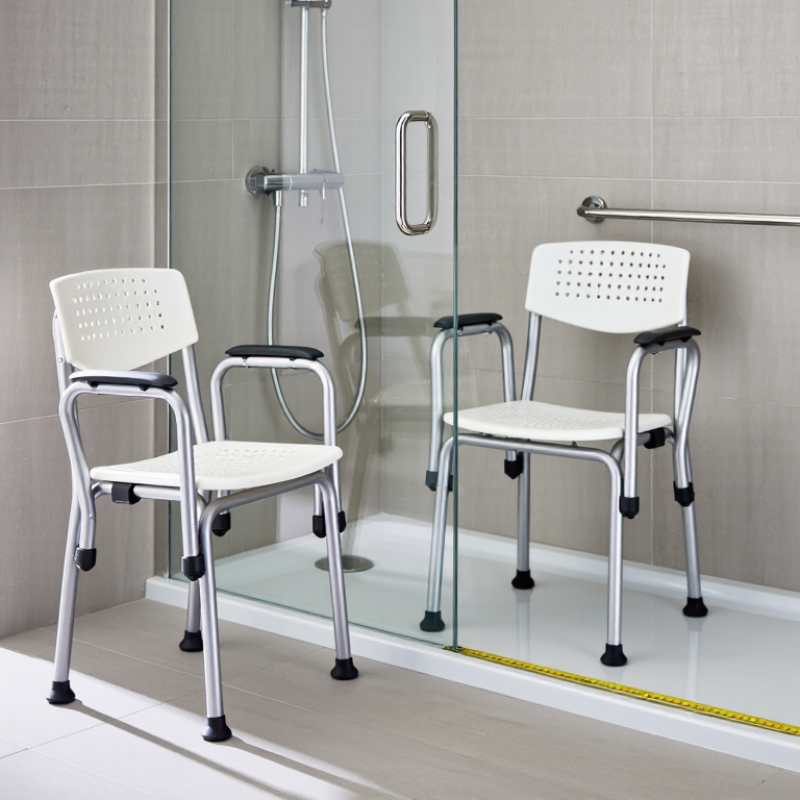
Choosing the right shower chair starts with the user’s mobility, not the bathroom’s appearance. Watch how they sit, stand, and turn. Can they step over a tub edge, or do they need a level transfer? Notice whether they can reach for support without leaning. Balance, fatigue, pain, and the need for a caregiver’s help all affect which chair feels manageable. Small details matter.
Next, check seating fit. Measure the user’s hip width while seated, then compare it with the chair’s usable seat width. A cramped seat can make transfers harder; an overly wide one may leave the user reaching for the armrests. Seat depth should support the thighs without pressing behind the knees. Adjust the height so both feet can rest steadily on the floor or shower base. Check the chair’s weight limit, and make sure its legs fit securely in the available space. I used to focus mostly on seat width; that missed how difficult a transfer can feel.
Tips: If possible, have the user try sitting and standing with supervision before purchase. Ask a clinician or occupational therapist for guidance when balance or transfer needs are unclear. A quick measurement can help, but it cannot show everything.
Watch how the user sits, stands, and turns. Consider balance, fatigue, pain, and whether a caregiver helps. Small details matter.
Measure hip width while seated and compare it with the usable seat width. The seat should support the thighs without pressing behind the knees. I used to focus only on width; that missed transfer difficulty.
Set the height so both feet rest steadily on the floor or shower base. The user should be able to sit and stand without struggling.
Compare the stated capacity with the user’s weight and follow the chair’s instructions. Do not assume every chair supports the same load.
Make sure each locking pin engages and the chair sits level. Recheck the settings after moving it. Easy to overlook.
Measure the available space and check that all legs can rest securely inside it. Test the chair on a dry, level surface and check for wobble.
If possible, supervise a trial of sitting and standing. A quick measurement helps, but it cannot show everything.
Ask a clinician or occupational therapist when balance, pain, or transfers are difficult to assess. A well-fitted chair can support safer bathing, but it cannot remove every fall risk.
Choosing the right shower chair starts with understanding the user’s mobility needs and how they will sit, stand, and move during bathing. Consider whether they need a seat with a backrest or armrests, and how much support they need to transfer safely. Before selecting a chair, measure the shower’s interior dimensions, doorway, and entry clearance. Compare those measurements with the chair’s overall width and depth to make sure it fits without restricting movement or access to controls.
If you are asking, “what size shower chair do I need,” also check the seat height, weight capacity, and whether the legs can be adjusted. The seat should allow the user to sit comfortably with their feet supported, while the chair remains stable on the shower floor. Confirm that there is enough space to move around it safely and that its feet sit securely without rocking. Careful measuring and a practical fit check can help make showering more comfortable and secure.

 Aura Medical