Car entry can be challenging for many individuals, especially the elderly and those with mobility issues. This is where the question arises: why use a swivel seat for car entry? A swivel seat provides a unique solution. It allows for easier access to the vehicle, enhancing comfort and safety.
Imagine standing outside a car, struggling to twist your body to sit down. It can be awkward and painful. A swivel seat eliminates that struggle. With a gentle turn, you find yourself comfortably settled. This simple yet effective tool reduces the risk of strain or injury. It encourages independence, making driving accessible for more people.
Using a swivel seat can also deepen our understanding of mobility aids. These devices are not just functional—they're empowering. They remind us that with the right support, everyone can maintain their freedom and dignity. Reflecting on this, we realize that small changes can have significant impacts on daily life. Flexible car entry solutions deserve attention. This could improve countless journeys for many individuals.
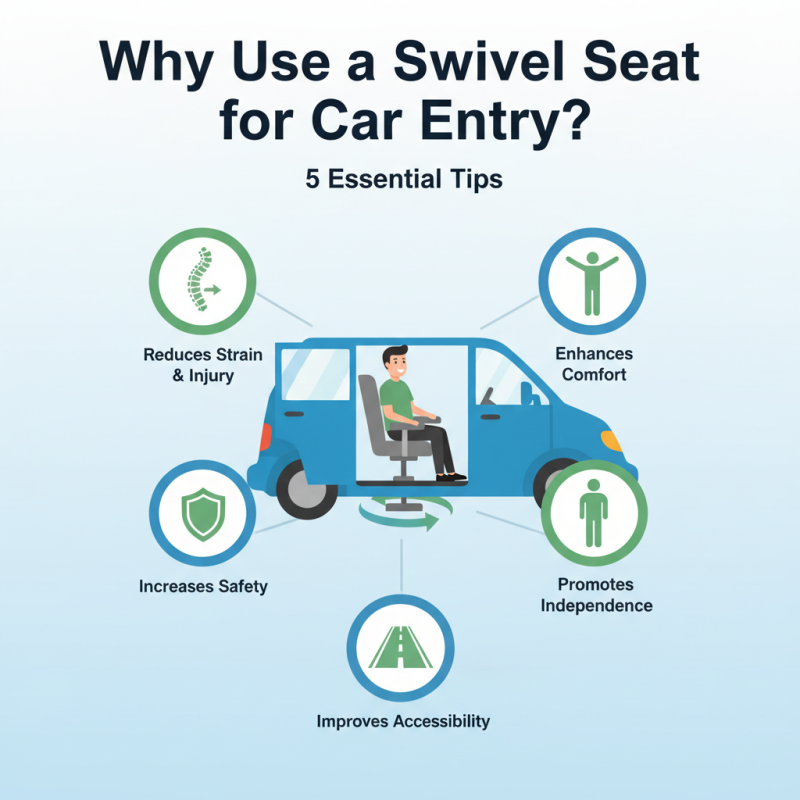
Swivel seats can significantly enhance car accessibility for many individuals. Research indicates that about 60% of older adults struggle with vehicle entry and exit. Swivel seats offer a practical solution by allowing users to rotate toward the door, reducing the need for twisting or straining. This design minimizes the risk of injuries, particularly for those with limited mobility.
According to a study from the National Institute on Aging, falls during car entry account for a large percentage of emergency room visits by seniors. A swivel seat allows users to maintain a more natural posture while entering or exiting. This feature becomes essential for those dealing with arthritis or back pain. Accessibility is not just about comfort; it's about safety and independence.
Despite these benefits, some users find swivel seats less familiar at first. Adjusting to this new system might take time. However, with proper training and practice, users often report an enhanced sense of freedom when driving. The ability to enter and exit the vehicle with ease can significantly impact one’s quality of life.
| Tips | Benefits | Considerations |
|---|---|---|
| Choose the Right Swivel Seat | Improved comfort during entry and exit | Ensure it fits your vehicle model |
| Install Properly | Enhanced stability and safety | Follow instructions carefully |
| Practice Using the Seat | Increased familiarity and ease | Allow time to adjust |
| Keep the Area Clear | Reduced risk of accidents | Maintain clean surroundings |
| Seek Professional Help | Expert guidance for best results | Consider costs of installation |
: Swivel seats enhance car accessibility, making entry and exit easier for individuals with mobility challenges.
They allow users to rotate toward the door, minimizing twisting and straining during entry or exit.
Older adults and individuals with arthritis or back pain find swivel seats particularly helpful for safer car access.
Some users may find swivel seats unfamiliar initially. Adjusting can take time and practice, which requires patience.
Regularly check the seat’s mechanisms, lubricate hinges, and clean the surface to prevent wear and prolong lifespan.
Use a damp cloth and mild soap. Avoid harsh chemicals that could damage the materials of the seat.
Look for loose bolts or screws, as a rattling seat may indicate mechanical issues that require attention.
Many report improved confidence and independence while traveling, but experiences vary based on individual needs and adjustments.
Yes, proper installation is essential for functionality. Adjustments may also be necessary based on different body types and vehicles.
Neglecting maintenance and proper use can lead to injuries and decrease the overall functionality of the swivel seat.
Swivel seats have become an essential aid for individuals facing mobility impairments, offering significant benefits for enhanced car accessibility. The article delves into the reasons why use a swivel seat for car entry, highlighting how these seats facilitate easier access and egress from vehicles, thus reducing the risk of injury and increasing independence. Key statistics present the challenges faced by those with mobility issues, emphasizing the need for adaptive solutions in transportation.
Additionally, the article provides essential guidelines for selecting the appropriate swivel seat for various vehicle types, ensuring a perfect fit that maximizes usability. Maintenance tips are also included to promote the longevity of swivel seats, contributing to their reliability over time. Finally, user testimonials offer real-life experiences, showcasing the transformative impact of swivel seats on users' daily lives and affirming their value in enhancing mobility and accessibility.

 Aura Medical