10 Tips to Set Up a Fall Proof Living Room

Time:2026-11-02 Author:Oliver
0%

A living room should invite people to sit, move, and relax—not make every trip across the rug a gamble. Yet everyday details can create real hazards: a curled rug edge, a charging cable, or a dim path to the hallway. The Centers for Disease Control and Prevention (CDC) estimates that about 14 million adults aged 65 and older report falling each year—roughly one in four. The World Health Organization’s Falls fact sheet also identifies older adults as a group at particularly high risk. These figures describe a public-health problem, not an inevitable part of aging.

Learning how to set up a fall-proof living room starts with noticing how the room is actually used. Where does someone reach for a lamp? Is the favorite chair low, soft, or difficult to rise from? Is the route to the bathroom clear after dark? Small changes matter. Secure rugs, move cords away from walking routes, improve lighting, and keep frequently used items within easy reach. A sturdy chair with armrests may help, but individual needs differ; a clinician or occupational therapist can offer tailored guidance, especially after a fall or when mobility has changed. No room can be made perfectly safe. Even a tidy-looking space may conceal a hazard, so review the setup as routines and abilities change. The tips ahead focus on practical adjustments that make movement easier without turning a comfortable living room into a clinical-looking space.
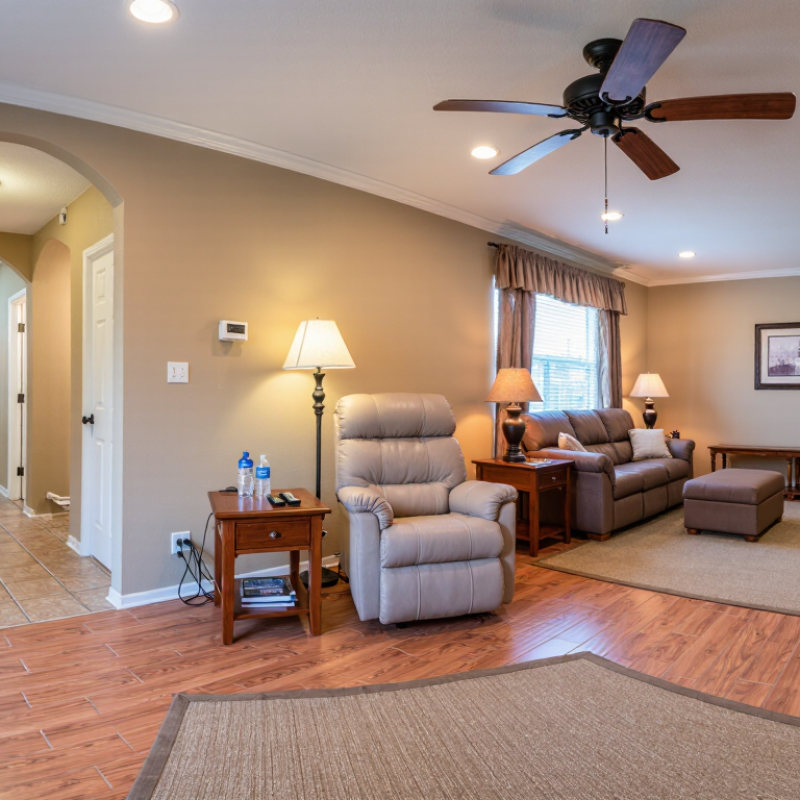
10 Tips to Set Up a Fall Proof Living Room

Assess Fall Risks in the Living Room

Begin by walking the living room’s usual route, from the doorway to the sofa and onward to the hall. Check it in daylight and after dark, when shadows can hide objects. Look down. Note curled rug edges, loose floor mats, charging cables, and items left beside the sofa. These small obstacles are easy to overlook during a quick glance. Walk the route at your normal pace, then notice where you slow down, turn, or reach for support. A narrow gap between furniture may feel manageable until you carry a cup or feel tired.

Check the room from a seated position, too. Can you stand without pushing against an unstable side table? Is the lamp switch easy to reach, and does the light reach the path to the doorway? Look for furniture that shifts when touched, sharp corners near walking paths, and low objects that blend into the floor. Pets and frequently used belongings can change the route from day to day. Make a short list, even if it seems fussy; patterns are easier to spot on paper. If balance or vision concerns make the check difficult, ask a healthcare professional or occupational therapist to assess the room with you.

Clear Walkways and Remove Tripping Hazards

A safer living room starts with a route you can walk without weaving around furniture. Keep the path from the doorway to the sofa and bathroom open. Move baskets, footstools, pet toys, and loose charging cords out of it. The U.S. Centers for Disease Control and Prevention reports that about one in four adults aged 65 and older falls each year. Its STEADI initiative identifies household hazards, including clutter and loose rugs, as risks worth addressing. Small obstacles matter.

Anchor or remove throw rugs, especially beside sofas and at thresholds. If a rug’s edge curls, replace it rather than hoping visitors will notice. Run lamp and device cords along walls, not across the floor. Leave enough space between a coffee table and seating for a steady step, even when carrying a cup. Check the route at night; a clear path in daylight can disappear in shadow. Good lighting helps, but it cannot fix a crowded walkway. Familiar clutter is easy to overlook, so walk through the room as if seeing it for the first time. One pass may not catch everything.

Arrange Furniture for Safe Movement

Arrange furniture around a clear, well-lit route between the room’s entrance, seating, and other frequently used areas. Keep it clear. A path about three feet wide can help many people pass without turning sideways, though room dimensions and mobility needs vary. Move coffee tables away from the direct route, and avoid placing low stools where they blend into shadows.

Place chairs firmly on the floor, with enough space to approach and sit down without twisting around a table. A stable chair with armrests may make standing easier for some people. Keep frequently used items, such as a reading lamp’s switch or a phone, within comfortable reach. Check that cords run along walls rather than across walking areas. Tape may not hold well on every floor, so inspect it regularly.

Rugs can curl, slide, or catch a shoe. Remove loose ones or secure them with suitable nonslip backing, then check the edges by hand. Leave room for walkers or canes to turn near seating; a tight corner can be harder to manage than it looks. Try walking the route at night, too. The arrangement may seem fine in daylight, yet a dark gap beside the sofa can be easy to miss. Adjust one piece at a time, and ask the person using the room what feels awkward.

10 Tips to Set Up a Fall-Proof Living Room: Arrange Furniture for Safe Movement

Tip What to Do How to Check It
1 Create clear walking routes. Arrange chairs, tables, and other furniture so people can move between the room’s entrances and seating without weaving around obstacles. Walk each route at a normal pace and check that furniture does not narrow or block the path. Allow extra space for a cane, walker, or wheelchair if one is used.
2 Remove loose throw rugs. Rugs can shift, curl, or bunch underfoot. Removing them is often the simplest way to eliminate this tripping hazard. Check the floor for small mats and rug edges, including near doorways and beside seating.
3 Secure necessary rugs. If a rug must stay, use an appropriate non-slip rug pad and keep all edges flat. Avoid placing rugs where people need to turn or step frequently. Gently test whether the rug slides, and inspect its edges for curling or damage.
4 Keep cords out of walkways. Route lamp, phone, and entertainment cables along walls or behind furniture. Do not run cords across a path. Check from the room entrance to every seat for cords that cross a walking route or are hidden under loose coverings.
5 Make seating stable and easy to use. Position sturdy chairs so they do not rock or slide. Chairs with armrests can provide support when sitting down or standing up. Check that each chair sits firmly on the floor and that there is enough room to approach it without moving other furniture.
6 Place tables within easy reach. Keep frequently used items, such as a phone or remote control, on a stable side table near the main seat. Make sure items can be reached without leaning far, stretching across a walkway, or standing on an unstable surface.
7 Improve lighting. Use adequate lighting for the room and its entrances. Add a lamp where needed, and make switches easy to reach when entering the room. Check the route from the doorway to the seating area in the evening and replace burned-out bulbs promptly.
8 Make level changes easy to see. Keep step edges and changes in floor level unobstructed. Good lighting and clear visual contrast can help make these changes more noticeable. View the route from a standing or seated position and check that furniture, décor, or shadows do not hide an edge.
9 Keep frequently used items off the floor. Store shoes, bags, blankets, pet toys, and other belongings in designated places rather than beside chairs or along walking routes. Do a quick floor check before bedtime and after activities that may leave items in the room.
10 Recheck the layout as needs change. Keep mobility aids, pets, and changes in vision or balance in mind when arranging the room. Ask the person who uses the space what feels difficult. Review the walking routes after moving furniture or adding items, and consider asking a healthcare professional for individualized fall-prevention advice.

Improve Lighting and Secure Rugs

A fall-proof living room starts with light you can reach before you step into the room. The CDC reports that about one in four adults aged 65 and older falls each year. That figure does not mean every fall happens at home, but it makes everyday hazards worth checking. Add a lamp near the sofa and keep its switch easy to find. Use warm, even light, and replace dim bulbs promptly. A small night-light can help show the route to the hallway. Check for glare on polished floors, too; bright light can still hide a change in floor level.

Rugs need attention, not guesswork. The National Institute on Aging advises removing small throw rugs or securing them with double-sided tape. If a rug stays, use a non-slip backing and press down every edge. Check again after vacuuming, when corners can curl. Keep cords beside walls, not across walking paths. Leave a clear strip between the sofa, coffee table, and doorway. Small changes help. I once thought a lamp was bright enough until its shadow fell across the rug’s edge. That is an imperfect test, so walk the room at night and ask someone else to check the view.

Add Stable Support and Check Safety Regularly

A steady living room starts with support that will not shift when someone reaches for it. A heavy chair can look reassuring, but appearance is not a safety test. Gently press the arms and back before relying on them. If the chair rocks, slides, or feels loose, move it or have it repaired. Keep a stable seat near the places where someone often pauses, such as beside a reading lamp. It should be easy to reach, not tucked behind a coffee table. Small details matter.

Check supports regularly, especially after furniture has been moved or floors cleaned. Try each handrail, chair arm, and grab point with light pressure. Look for loose screws, cracked joints, wobbly legs, and worn rubber feet. Don’t use a rolling table or lightweight shelf for balance. Those can move suddenly. Clear the path to each seat, and make sure cords do not cross it. Add a lamp where shadows hide the floor edge. Monthly checks are a useful habit, though busy homes may need them more often. If a support needs wall mounting, get appropriate installation help; a poorly anchored rail can create a new hazard. I sometimes overlook the quietest risks, like a chair that has slowly crept away from the wall.

FAQS

How should I check the living room for fall risks?

Walk from the doorway to the sofa and hall. Check in daylight and after dark. Look for curled rug edges, cables, and objects beside the sofa.

Why should I test the route at my normal pace?

Notice where you slow down, turn, or reach for support. Carrying a cup or feeling tired may make a narrow gap harder to manage.

What should I check while seated?

See whether you can stand without leaning on an unstable table. Check that the lamp switch is reachable and light reaches the doorway path.

How wide should a clear walking path be?

About three feet can help many people pass without turning sideways. Room size and mobility needs vary, so adjust the route as needed.

Where should furniture and everyday items go?

Keep coffee tables and low stools out of the direct route. Place a phone or lamp switch within comfortable reach. Keep chairs steady.

What can I do about loose rugs and cords?

Remove loose rugs or secure them with suitable nonslip backing. Run cords along walls, not across walking areas. Check tape often.

Should I check the room at night?

Yes. Shadows can hide objects, and a gap beside the sofa may be easy to miss. Check again.

What if the room still feels difficult to navigate?

Ask the person using the room what feels awkward, then adjust one piece at a time. This check may miss things; a healthcare professional or occupational therapist can help assess the room.

Conclusion

Creating a safer living room begins with identifying potential fall risks, such as cluttered paths, loose rugs, dim corners, and furniture that is difficult to navigate around. Clear walkways by removing unnecessary items and keeping cords out of foot traffic. Arrange chairs, tables, and other furnishings to leave enough open space for steady, unobstructed movement, especially between commonly used areas.

To understand how to set up a fall-proof living room, improve lighting so entrances and pathways are easy to see, and secure rugs or remove them if they tend to shift. Place stable support where it may be useful, and check that furniture remains steady. Reassess the room regularly as needs or belongings change, so new hazards can be addressed promptly and the space stays comfortable and easier to move through.

Oliver

Oliver

Oliver is a seasoned marketing professional with a wealth of expertise in driving brand awareness and engagement. With a deep understanding of our company's product offerings, he consistently delivers high-quality content that enriches our professional blog. His insights not only shed light on......