A bathroom can feel predictable until standing becomes difficult. The toilet is low, the floor may be slick, and a towel rail is not a safe handhold. That is why families often ask, “why is a toilet armrest better than a wall bar?” The answer depends on the user, the bathroom, and how each support is installed. A toilet armrest sits close to the seat, placing support where the user needs it during sitting and standing. A wall bar can offer a firm grip, but its position may not suit every reach or transfer.
For a practical frame of reference, consider this illustrative comment from fictional accessibility consultant Elena Morris: “Support works best when it meets the person’s movement, not just the room’s layout.” This is a general design principle, not a verified quotation from a real expert. The seven reasons ahead will examine reach, balance, installation, flexibility, and everyday comfort. Small details matter: armrest height, seat clearance, floor space, and whether the frame stays steady under pressure. No single aid is right for everyone. A poorly fitted armrest can obstruct movement, while a well-placed wall bar may be the safer choice for some users. That deserves a closer look. A caregiver’s brief test may reveal discomfort, but a qualified occupational therapist can help assess individual needs and recommend suitable equipment. These comparisons are useful, though not a substitute for professional assessment.
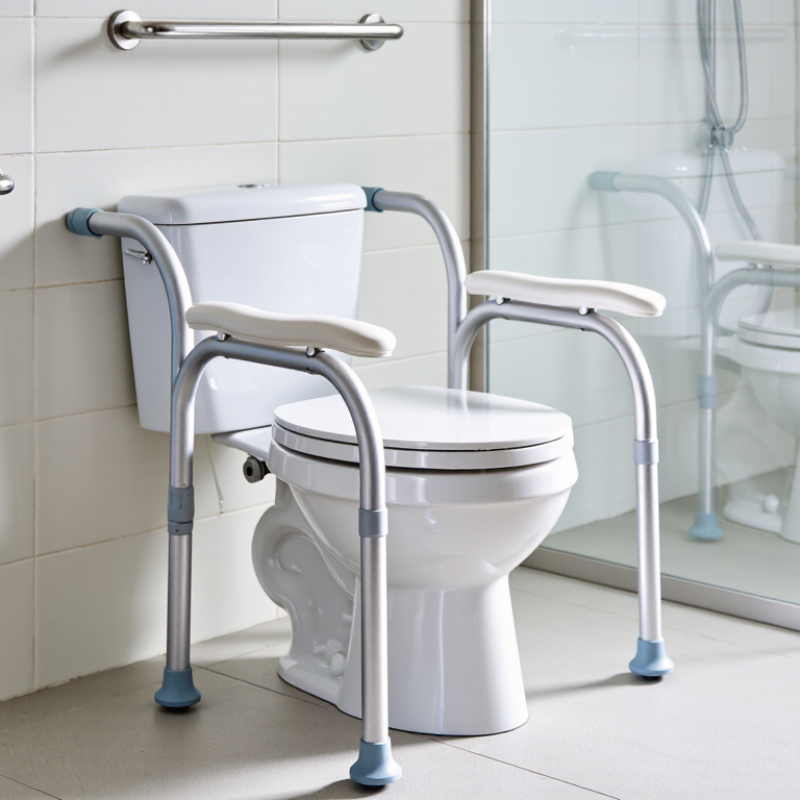
A toilet armrest and a wall-mounted grab bar offer different kinds of support. Armrests sit beside the toilet seat, giving users two nearby surfaces to push against when sitting or standing. Depending on the model, they attach to the toilet or rest on the floor. A wall bar stays fixed to the wall, so its position does not change with the toilet. Placement matters.
The CDC’s 2011 report, “Nonfatal Bathroom Injuries Among Persons Aged ≥15 Years—United States, 2008,” estimated 234,094 U.S. emergency-department visits for bathroom injuries each year; falls accounted for about 81 percent. These figures cover bathrooms broadly, not toilet transfers alone. Still, they show why secure support deserves attention. An armrest can be easier to reach from the seat, while a wall bar may suit someone who needs support while turning or moving around the room. Neither works well if poorly positioned.
Measure the user’s reach and check the product’s weight capacity before installation. Wall bars need secure anchoring; toilet frames need a stable, level floor and a snug fit. Small details count. Armrests can crowd a narrow bathroom, and some users may prefer a fixed bar. That is worth reconsidering. For people with balance problems or recent falls, an occupational therapist can assess transfer needs and suggest suitable placement.
A toilet armrest places support beside the seat, close to where the body needs it during a transfer. A person can grip both sides, lean forward, and push up without reaching toward a distant wall. That matters when knees feel stiff or balance is uncertain. The CDC’s older-adult falls data report that about 14 million adults aged 65 and older fall each year. That is roughly one in four. The figure does not isolate toilet transfers, but it shows why everyday movements deserve attention.
A wall bar can offer useful support, especially when positioned for standing or turning. But its distance and angle may not suit every toilet or user. Armrests provide nearby handholds on both sides, and some models adjust to different seat heights. Look for stable installation, a suitable weight rating, and enough room for safe transfers. Small details count: a secure grip, dry flooring, and feet set firmly before standing. Not a cure-all. A poorly fitted armrest can create new problems, and personal needs vary. An occupational therapist can assess the setup; even then, the best position may take adjustment.
The chart shows selected toilet grab-bar dimensions from the 2010 ADA Standards for Accessible Design. Toilet armrests can place handholds on both sides of the seat for sitting down and standing up, while wall bars provide fixed support. These supports are not interchangeable in every bathroom; choose equipment suited to the user and installation, and follow its instructions.
A toilet armrest can feel easier to reach because it sits beside the seat, close to where your hands naturally rest. You may not need to lean or turn toward a wall-mounted bar. That small difference matters when standing feels unsteady, or when your shoulders are stiff. The best position depends on your body and bathroom layout.
Picture lowering yourself onto the seat after a long day. A nearby armrest gives each hand a clear place to land, often with a broad surface that is easier to grip than a narrow bar. No twisting. A wall bar can still work well, especially when someone needs support while moving between the toilet and another area. But if it is too far forward or high, reaching for it may feel awkward. Wet hands, limited finger strength, and loose clothing can change what feels secure. That is easy to overlook.
Fit matters more than appearance. Check that the armrests do not block a walker, wheelchair, or a helper’s access. Sit down and stand up slowly while testing the hand position, with another person nearby if balance is a concern. The support must be stable and installed according to its instructions; a loose fitting can create risk. An occupational therapist or qualified installer can help assess reach, transfer technique, and bathroom clearance. One honest caveat: an armrest is not right for every toilet or every body. The choice may take a little trial and adjustment.
A freestanding toilet armrest can be positioned beside the toilet without drilling into a wall. That makes it useful when wall studs are poorly placed, tiles should remain untouched, or the bathroom layout may change. You can adjust its distance from the seat, then test whether your hand lands naturally on the grip while sitting and standing. That matters. A few inches can change how much support feels available. In a shared bathroom, the frame may also be moved aside when someone needs more floor space. But moving it often can become a hassle.
Placement still needs care. Set the feet on a dry, level surface, and check that the frame does not rock when gently tested. Leave enough room for knees, clothing, and the toilet lid; a tight fit can make transfers awkward. Freestanding does not mean suitable for every floor or every user. Check the stated weight limit and setup instructions, and recheck any fasteners after assembly. I would not assume that a frame is secure just because it looks sturdy. If balance is poor or standing requires substantial help, ask a qualified health professional to assess the setup. A small shift in position may improve comfort, though it cannot replace an individualized safety assessment.
| Reason | Freestanding Toilet Armrest | Wall-Mounted Grab Bar | Practical Consideration |
|---|---|---|---|
| 1. Flexible placement | Can often be positioned beside the toilet without choosing a precise wall location. | Placement depends on the wall, mounting surface, and suitable fixing points. | Check that the frame fits around the toilet and does not block nearby fixtures. |
| 2. Usually no wall drilling | Many models stand on the floor and attach around or beneath the toilet, avoiding wall fasteners. | Requires secure installation into an appropriate structural surface; installation method varies by wall type. | Follow the product instructions. Some freestanding models still require assembly or toilet-bolt installation. |
| 3. Can suit more than one bathroom layout | A movable frame may be easier to adjust when the toilet is not beside a convenient wall. | Works best when a suitable wall is located where support is needed. | Measure available floor space, toilet height, and distance to nearby walls before choosing. |
| 4. Support on both sides | Many designs have armrests on both sides of the toilet. | Support is provided where the bar is installed; a second bar may be needed for the opposite side. | Two-sided support can be useful, but the user must be able to reach and use the armrests comfortably. |
| 5. Easier to reposition | Some models can be moved or removed if the bathroom arrangement changes. | A mounted bar stays in its installed position unless it is removed and the wall is repaired. | Repositioning depends on the model, assembly, and whether it is secured to the toilet. |
| 6. May avoid permanent changes | Can be a practical option for rented homes or bathrooms where drilling is not preferred. | Installation may require permission and can leave holes when removed. | Confirm lease rules and product requirements; a freestanding unit still needs a suitable, level floor. |
| 7. Useful when wall access is limited | Can provide nearby handholds even when a wall is distant, tiled, or interrupted by fixtures. | Needs a wall area that allows secure mounting and a useful handhold position. | Choose based on the user’s transfer direction, reach, balance, and bathroom clearances. |
Safety note: Freestanding armrests are not automatically safer than properly installed wall bars. Check the product’s stated load limit, stability requirements, fit, and installation instructions. A qualified professional can help assess the bathroom and the user’s support needs.
Toilet armrests can help people who need a steady push when sitting down or standing up. They may suit older adults, people with arthritis, and anyone recovering from surgery, if a clinician has cleared the movement. Broad, padded grips can feel easier to hold than a narrow bar, especially when finger strength is limited. That matters.
They can also work well beside toilets where wall space is scarce or awkwardly placed. A folding model may leave more room for caregivers or wheelchair transfers when raised. In a small bathroom, though, even a few inches can change how easily someone turns or closes the door. Measure the clear space before choosing.
Armrests are not automatically safer than a wall bar. Some attach to the toilet, while others need floor or wall support; each setup has different installation requirements and weight limits. Check the product instructions and ask a qualified installer to assess the toilet, flooring, and user’s needs. A loose fitting is a real concern. For people who pull strongly sideways, a properly installed grab bar may offer a more dependable handhold. Not always. The best choice depends on how the person moves, the bathroom layout, and whether assistance is available. Recheck fit and stability after installation, and revise the plan if transfers feel strained.
They provide handholds beside the seat. A person can lean forward and push up without reaching for a distant wall. Helpful, not magic.
Older adults, people with arthritis, and some people recovering from surgery may find them useful. A clinician should clear movement after surgery.
No. A properly installed wall bar may suit someone who pulls strongly sideways. The best choice depends on the person and bathroom layout.
Check stability, weight rating, seat height, and space around the toilet. Measure the area for turning and closing the door. A few inches matter.
They can fold up to make room for caregivers or wheelchair transfers. Check that they do not block turning or the door.
No. Some attach to the toilet; others need floor or wall support. Follow the instructions and ask a qualified installer to check the setup.
Keep the grip secure and the floor dry. Place both feet firmly before standing. Small steps help, but they do not remove every risk.
Recheck stability after installation. If transfers feel strained, adjust the position or ask an occupational therapist to assess it. One fitting may not be final.
Toilet armrests offer a practical alternative to wall-mounted grab bars by placing support directly beside the toilet. Their steady, well-positioned handles can help users lower themselves onto the seat and push back up with greater confidence, reducing the effort needed to balance during these movements. For people wondering why is a toilet armrest better than a wall bar, the key difference is often reach: armrests are designed to be close at hand, with a grip that can feel more natural while seated or standing.
Freestanding armrests can also be moved or positioned to suit a bathroom’s layout, making them useful where installing a wall bar is difficult or where support needs may change. They may benefit older adults, people with limited mobility, or anyone who feels unsteady using the toilet. Choosing between the two options depends on the user’s comfort, available space, and need for fixed versus flexible support.

Aura Medical